There Is No Closed Monday to Fix It On.
Breakfast, room service, banquets and a public restaurant can all run off one kitchen, and an institutional kitchen still has to serve every tray tomorrow. The repair has to fit around service, and the product cannot sit warm while it does.
A Kitchen That Never Gets a Dark Day
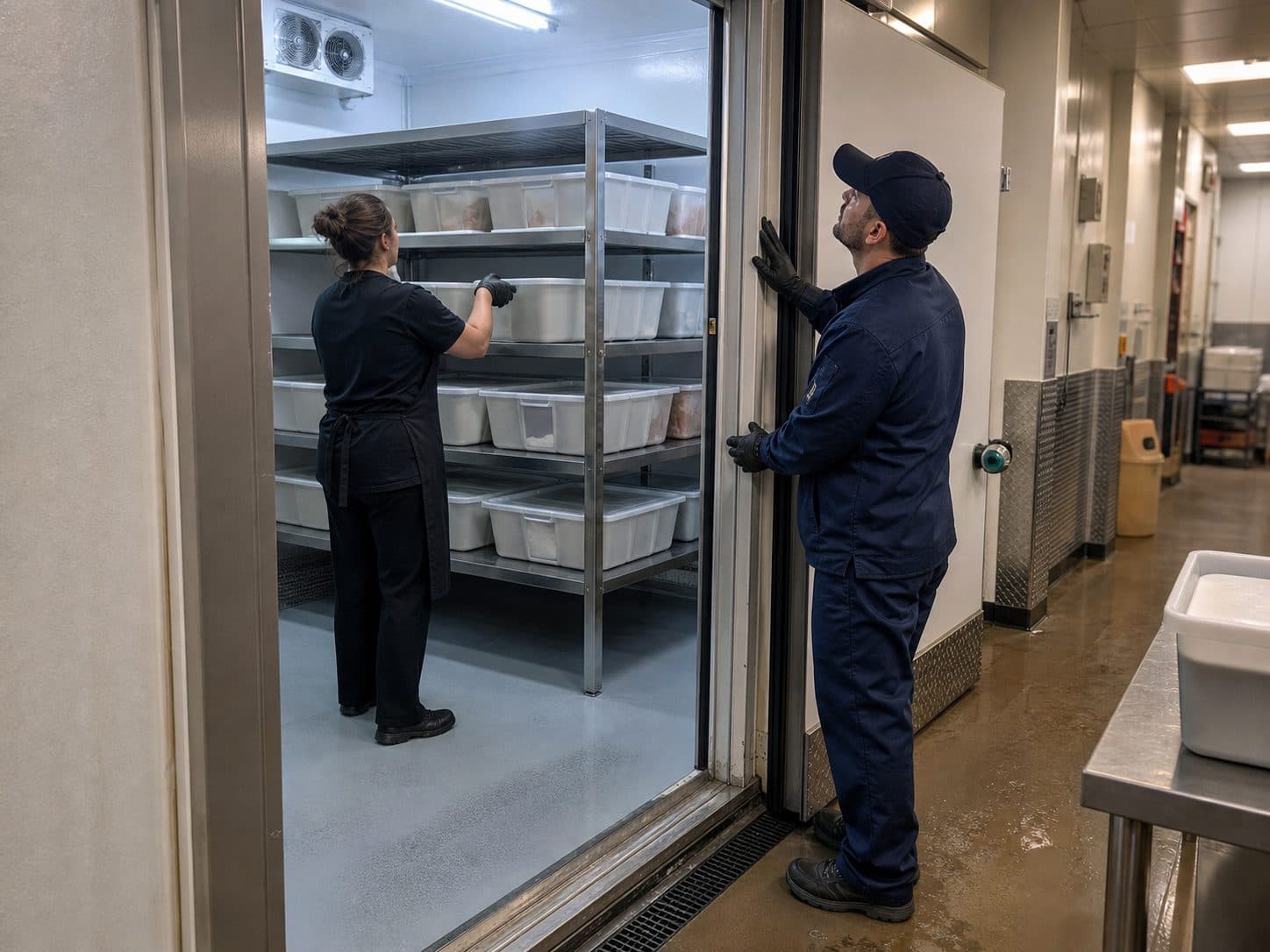
A standalone restaurant can push a repair to the day it is closed. A hotel usually cannot. Breakfast service, room service, banquet production and a public restaurant may share one kitchen and one set of cold rooms, and the gaps between those service periods are short. An institutional kitchen has the same problem in a different shape: the trays go out on schedule whether or not a walk-in is holding.
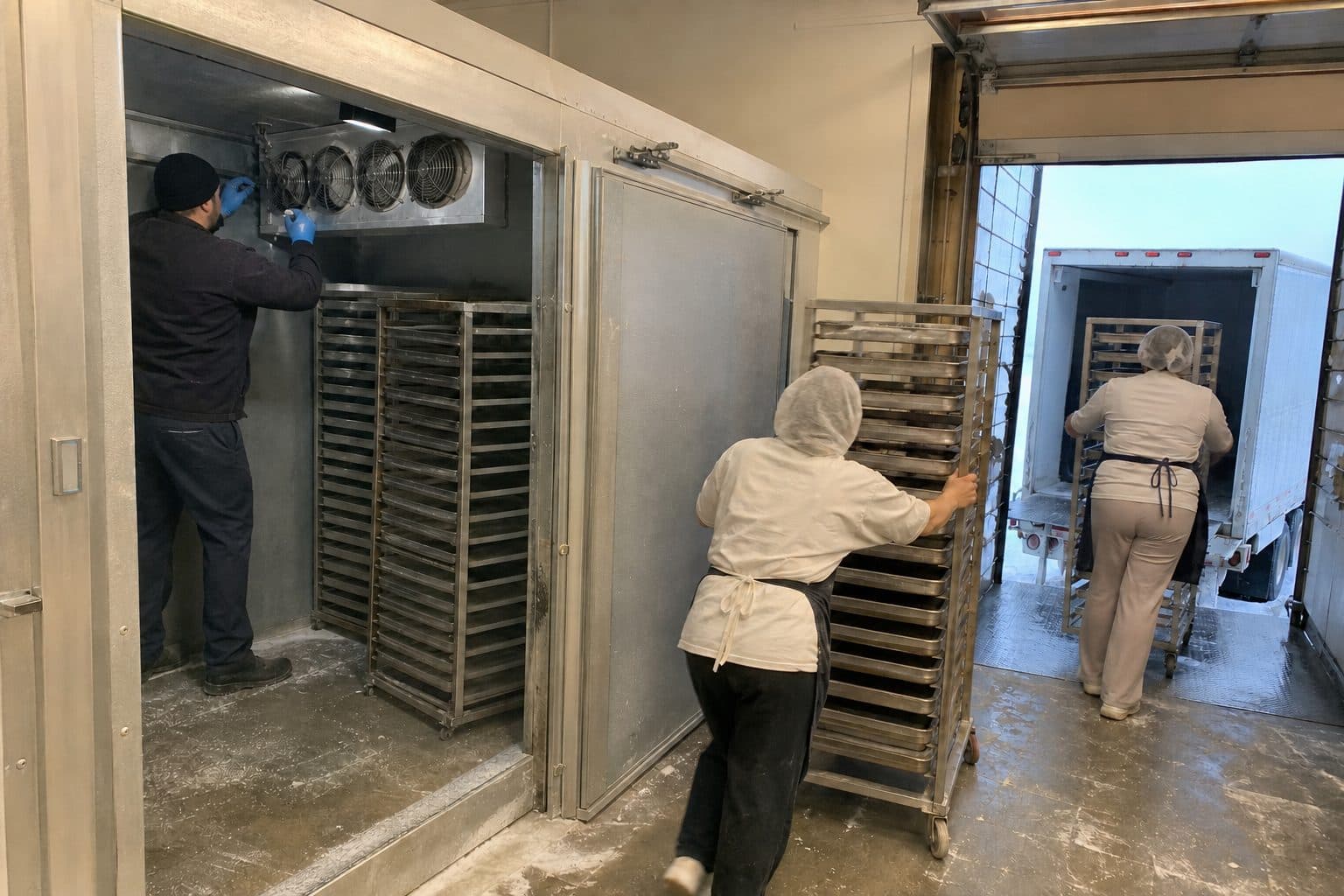
So the useful question is rarely whether the equipment can be repaired — it is where in the day the work can happen without the pass going down with it. Mobile cold storage and a 313A-licensed mechanic are dispatched on the same call, which means product can be coming out of a warming room while the fault is still being traced, instead of after someone has decided how long the repair will take.
What One Call Puts in Motion
A Banquet Is Booked Against a Date That Cannot Move
Event catering breaks the normal rhythm of a kitchen. Food for a two-hundred-cover wedding or a conference lunch is often prepped and held days ahead, in volume, in rooms and cabinets that are full precisely because the event is coming. Losing cold holding a day or two out is a different problem from losing it on an ordinary Tuesday: the prep hours are already spent, specialty product cannot always be re-ordered and re-made inside the window, and the event still happens on the date it was booked.
Which is why the first move is getting product into monitored storage rather than waiting on a diagnosis. What can still be served and what has to be re-made is your chef's call and your food safety plan's — and that call is far easier to make against a continuous temperature record than against a gap in one.
Feeding People Who Have No Alternative
A hospital, long-term care home, school, campus dining hall or correctional kitchen is not serving guests who can eat somewhere else if the kitchen has a bad night. Many of those trays are therapeutic or texture-modified and made to a specific order, and the kitchen typically runs under a documented food safety plan in which cold holding is a control point with temperature logs attached to it.
Ontario Regulation 493/17 requires hazardous food to be held at 4°C or colder and frozen food at −18°C or colder, an accurate and visible thermometer on every cold holding unit, and the premises to be kept in good repair. An inspector arriving under Toronto's DineSafe programme, or the equivalent programme in your municipality, is looking at the temperature the equipment is actually holding rather than the setpoint on the controller. An outage with nothing written down about it is a blank space in that record for the entire length of the diagnosis.
What the Service Record Carries
Ontario also restricts work on refrigerant systems to holders of a 313A Refrigeration and Air Conditioning Systems Mechanic certificate and registered apprentices working under one, and refrigeration work on your site is carried out by a TSSA-registered contractor. Both are worth asking any contractor to produce before they are standing in a regulated kitchen.
One Property, Several Rooms, More Than One Kitchen
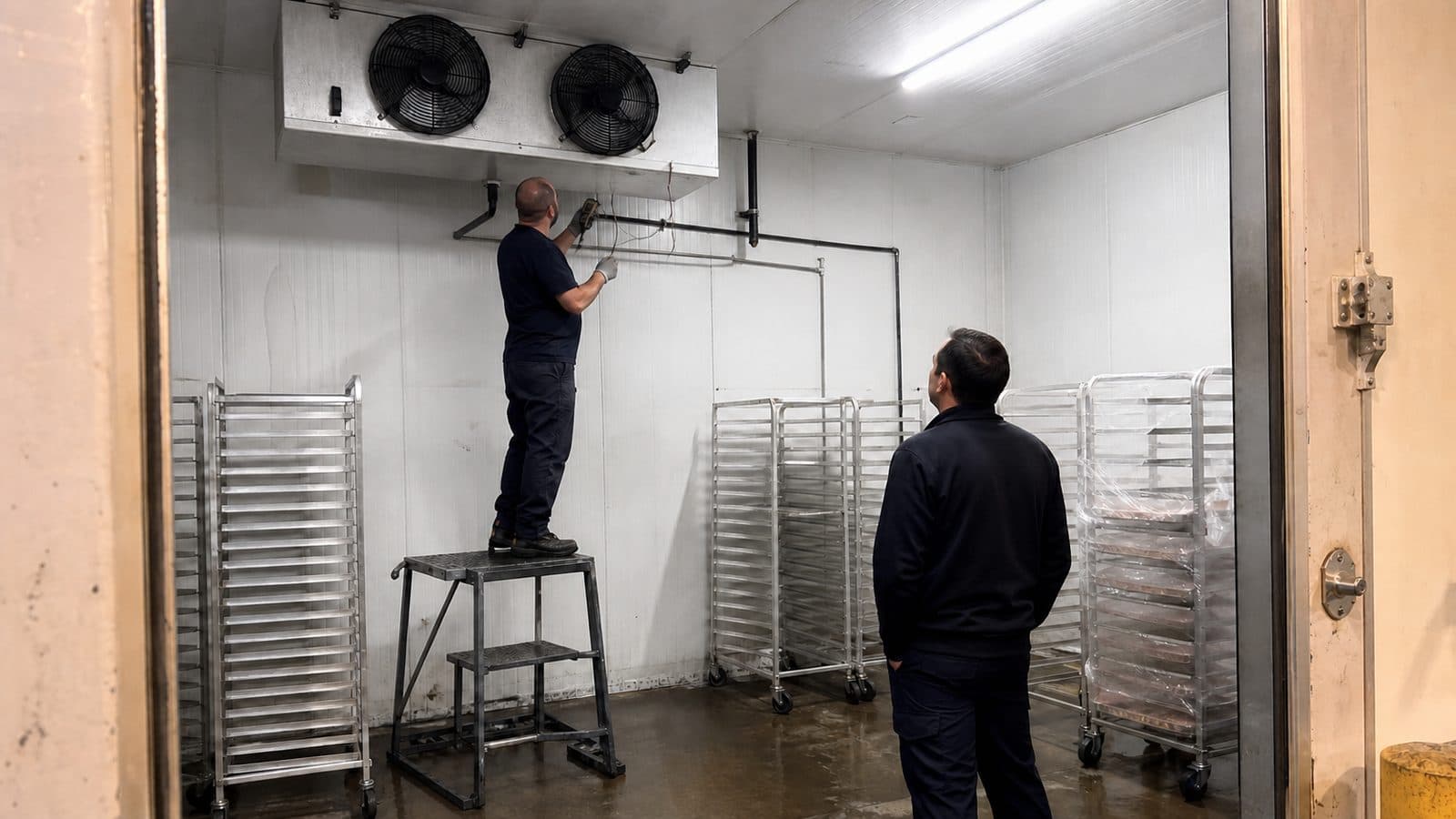
Refrigeration on a hotel or institutional site is rarely one box. A single property can carry banquet holding, a main kitchen walk-in and freezer, pastry and prep coolers, bar and ice service on several floors, and a receiving cold room at the dock — sometimes spread across more than one building. Where several of those rooms hang off one multi-compressor rack, a single failure upstream can take more than one room with it, and a room that still feels cold to the hand can be drifting.
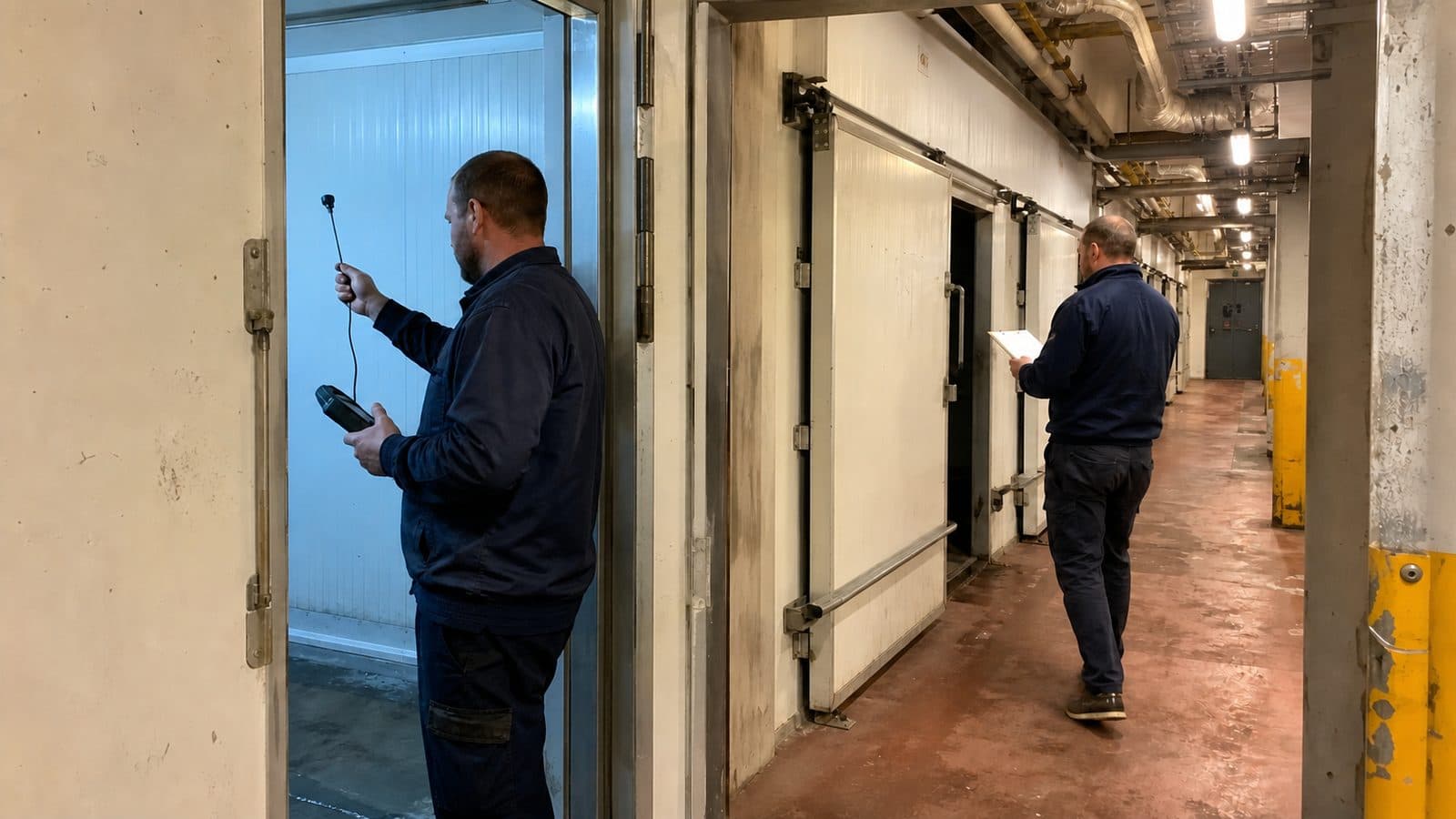
So dispatch wants the whole picture rather than the worst room: every unit that is out or reading wrong, which of them sit on the same system, and how product moves between them. The response is sized to that, and a temperature survey across the affected rooms is what says which ones are genuinely still holding.
Work That Happens on an Occupied Property
A hotel is somebody's night away, and a care home or hospital is somebody's ward. Equipment can be down and the property still has to look and run as though nothing is happening — which makes access, placement and timing part of the job rather than an afterthought to it.
- Trailer placement worked out with your engineering or security lead, clear of the guest entrance
- Service corridors, freight elevators and loading bays kept usable for deliveries and housekeeping
- Contractor sign-in, badging and escort procedures followed as the property requires
- Overnight and between-service dispatch when that is the quieter window to work in
- Transfer routes agreed with the chef so the line and the pass are not blocked
- Back-of-house staging, so product movement stays out of guest-facing areas
What the Work Looks Like Behind a Hotel or Institutional Kitchen
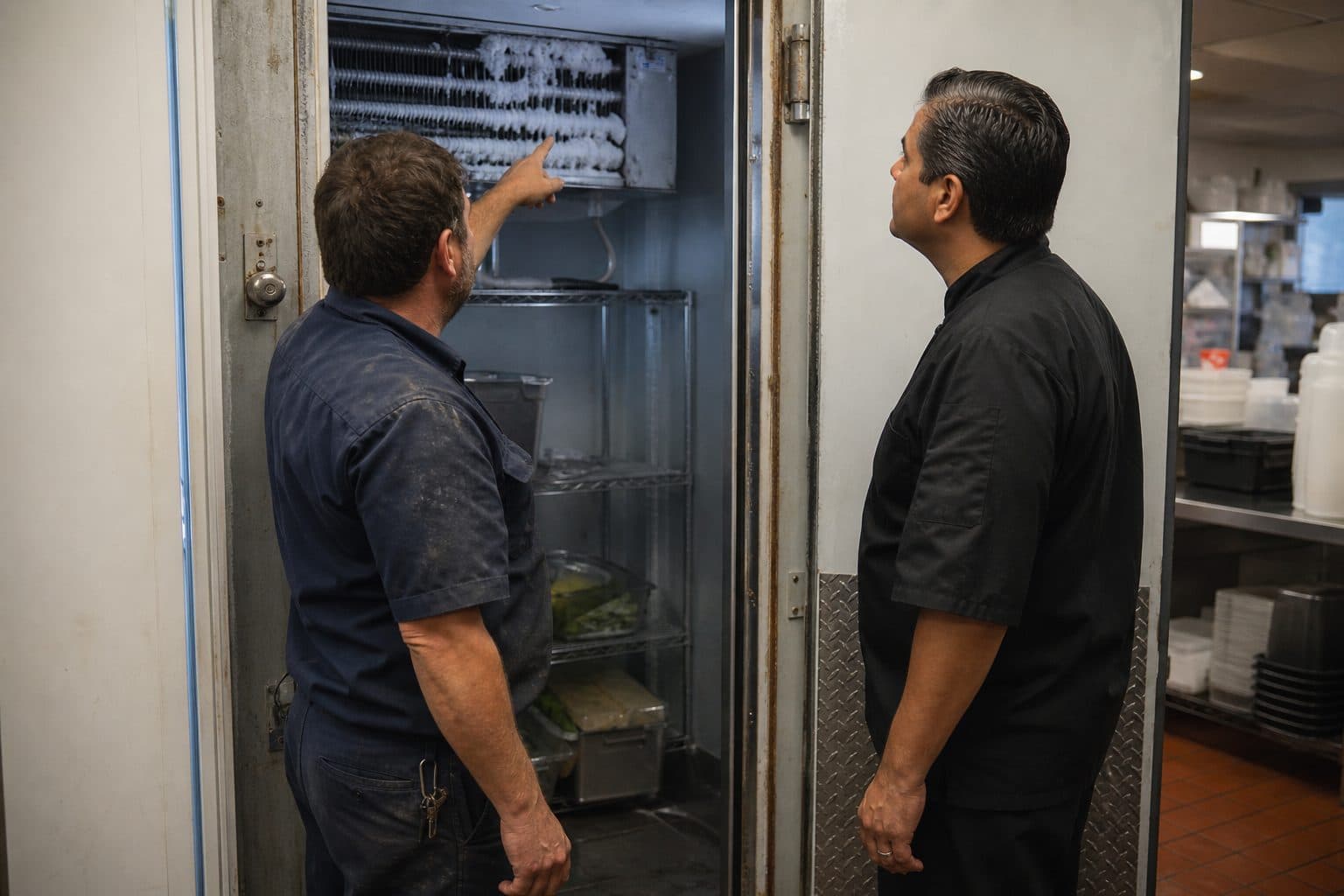
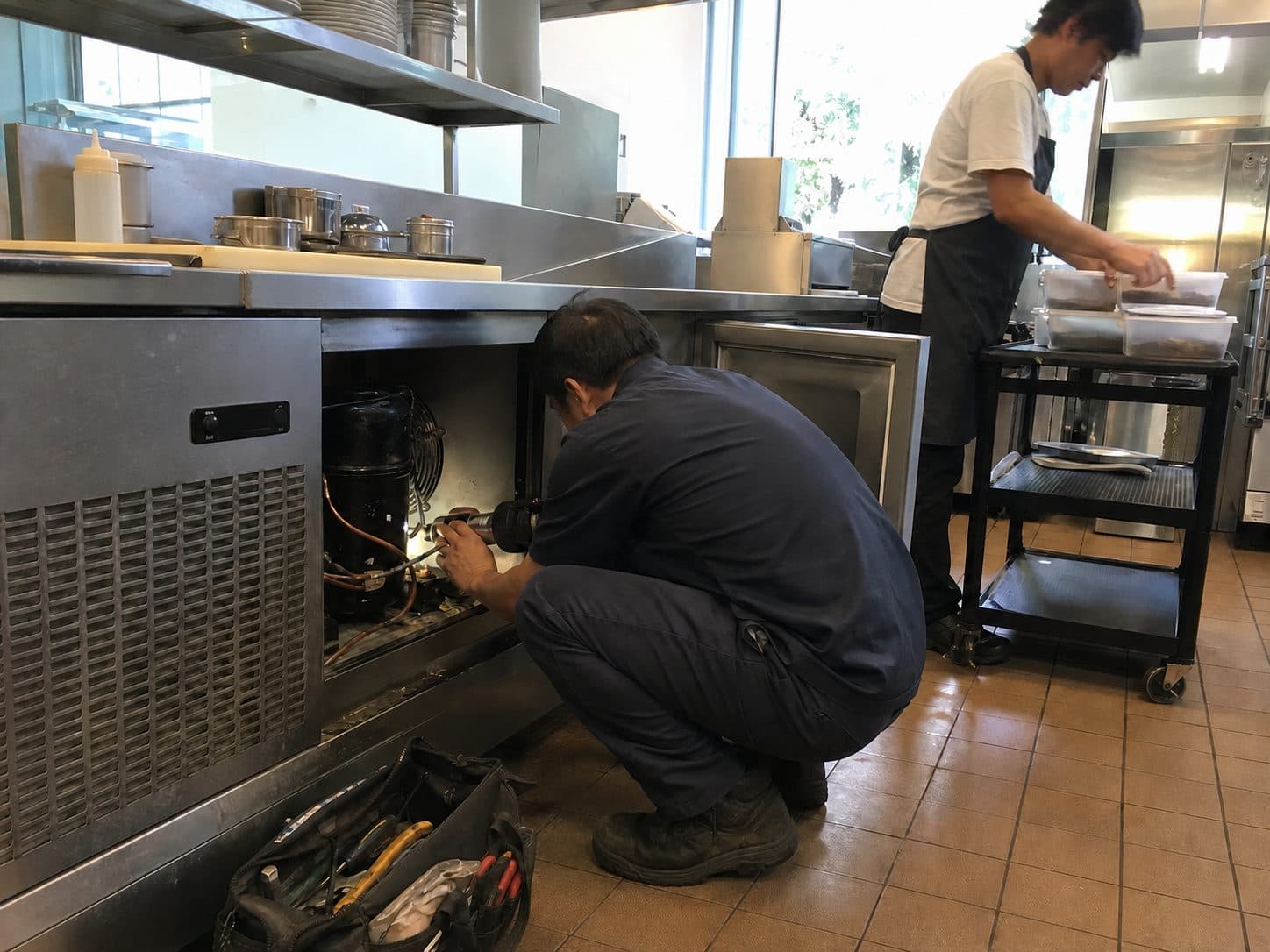
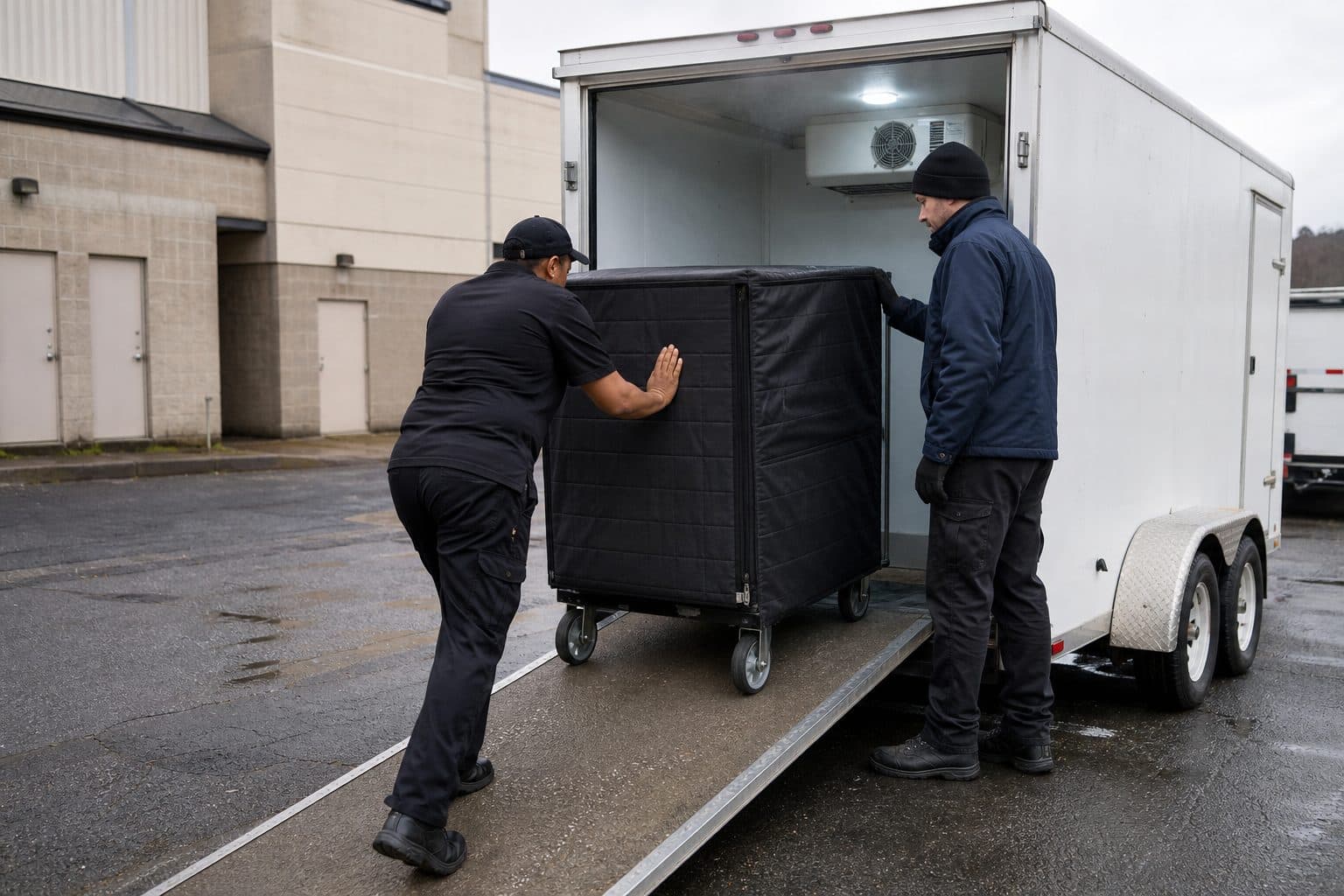
The faults behind a kitchen this size are rarely exotic — an iced coil, a prep unit that stopped pulling down, a room that has to be emptied while the property stays open. Here is the shape of a response on that kind of site.
Questions Executive Chefs and Facility Managers Ask Us
Our kitchen never really closes. When can the work actually happen?
Around your service periods rather than against them. Dispatch takes calls at any hour, so a transfer and a repair can be planned into the gap between breakfast and lunch, after the last cover, or overnight — whichever window costs you least. If product is already warming, the storage side does not have to wait for that window: it can be staged and loaded while the repair is scheduled into the quieter hours.
We have a banquet in two days and the cold holding just failed. What happens to what is already prepped?
Getting it into monitored cold storage comes first, before anyone knows how long the repair will take. Mobile cold storage is staged where your carts and racks can physically reach it, temperature is monitored and recorded for the whole time product is with us, and you get that record afterwards. What can still be served and what has to be re-made is your chef's decision and your food safety plan's — a continuous temperature record is what makes that decision possible rather than a guess.
Can a trailer be placed where guests will not see it?
That is worked out on the call, before anything rolls. Tell the coordinator what your service entrance, loading bay or back-of-house lot looks like — approach, clearance, where deliveries come in — and placement is planned around the guest entrance and the delivery schedule. Sign-in, badging and escort requirements are followed the same way any other contractor on your property follows them.
We run a documented food safety plan and keep temperature logs. What documentation do we get?
Temperature is monitored and recorded for the whole time product is in our storage, and the service record covers when dispatch took the call, when the crew and mechanic were on site, when product left your room and entered ours, the temperature held while it was with us, and the fault that was diagnosed. What that documentation has to satisfy is your plan and your food safety lead's call — we provide the record, you file it.
Several coolers went down at once, on different floors. Do we call about each one?
One call, and tell the coordinator about all of them. Where rooms share a multi-compressor rack, one failure upstream can affect several at once, and a room that still feels cold can be drifting. Dispatch would rather size the response to the whole picture — every unit that is out or reading wrong, and which ones sit on the same system — than send for one room and discover the rest on arrival.
Are your people licensed to work inside a hospital, care home or hotel kitchen?
The mechanic who works on your equipment holds a 313A refrigeration and air conditioning mechanic licence, and refrigeration work is carried out by a TSSA-registered contractor. Cold Rescue is WSIB registered and carries commercial liability insurance. Registration details are provided on request rather than published.
Tell Us What Is Down, and What Service Is Coming Next.
Give dispatch the property, the rooms affected, what is being held for an event or a service period, and where a unit can be placed. A coordinator calls you back to confirm the ETA and what is being dispatched. Already critical? Call the line directly: (416) 578-9977.