A Cold Room Down Stops the Line and Leaves a Gap in the Record.
In a processing plant or distribution centre, a refrigeration failure is three problems at once: product at risk, production halted, and a hole in the temperature documentation your food safety plan depends on. We work all three from the same call.
An Excursion Is a Records Problem, Not Only a Product Problem
In a CFIA-regulated facility running a HACCP-based food safety plan or a preventive control plan, cold holding is not an operational detail — it is a control point with written evidence attached to it. When a room loses temperature, your QA team has to be able to say what the product was exposed to, for how long, where it went, and what was wrong with the equipment. A repair-only call answers the last question and leaves the rest blank for the entire length of the diagnosis.
We run the two tracks together. Monitored mobile cold storage is staged at your dock while a 313A-licensed mechanic works the failed equipment — so product is moving into recorded cold storage at the same time the fault is being traced, and there is a document at the end of it rather than a gap.
What the Service Record Carries
Product Moves by Pallet, Not by Hand
A restaurant walk-in empties onto a rack and through a back door. A processing or distribution cold room empties by forklift, onto a dock, in pallet loads — and the equipment behind it is a different animal too: multiple cold rooms and freezer rooms running together, and multi-compressor rack systems where one failure takes several rooms with it.
So the response is sized to that, not scaled up from a single walk-in. Dispatch confirms what is affected — one room, a whole rack, chilled and frozen together — and puts together the cold storage around your load, your temperature range and what your yard and dock can physically take.
A Stopped Line Is the Loss You Do Not See on the Inventory Sheet
Spoiled product is the visible cost. The one that adds up alongside it is a production line standing still, a shift with nothing to run, and orders that still have to ship tonight. The point of staging storage at the dock is not only to save what is in the room — it is to keep the rest of the building working while the fault gets fixed properly.
- Trailer placement worked out with your shipping supervisor, so dock doors stay usable
- Staging clear of forklift lanes and pedestrian walkways
- Transfer by pallet where you move by pallet — jack or forklift, not hand-carried
- Sequencing agreed with production so a line restarts as soon as the fault allows
- Inbound and outbound loads kept moving while a room is down
- Overnight, weekend and sanitation-window dispatch when that is the quieter time to work
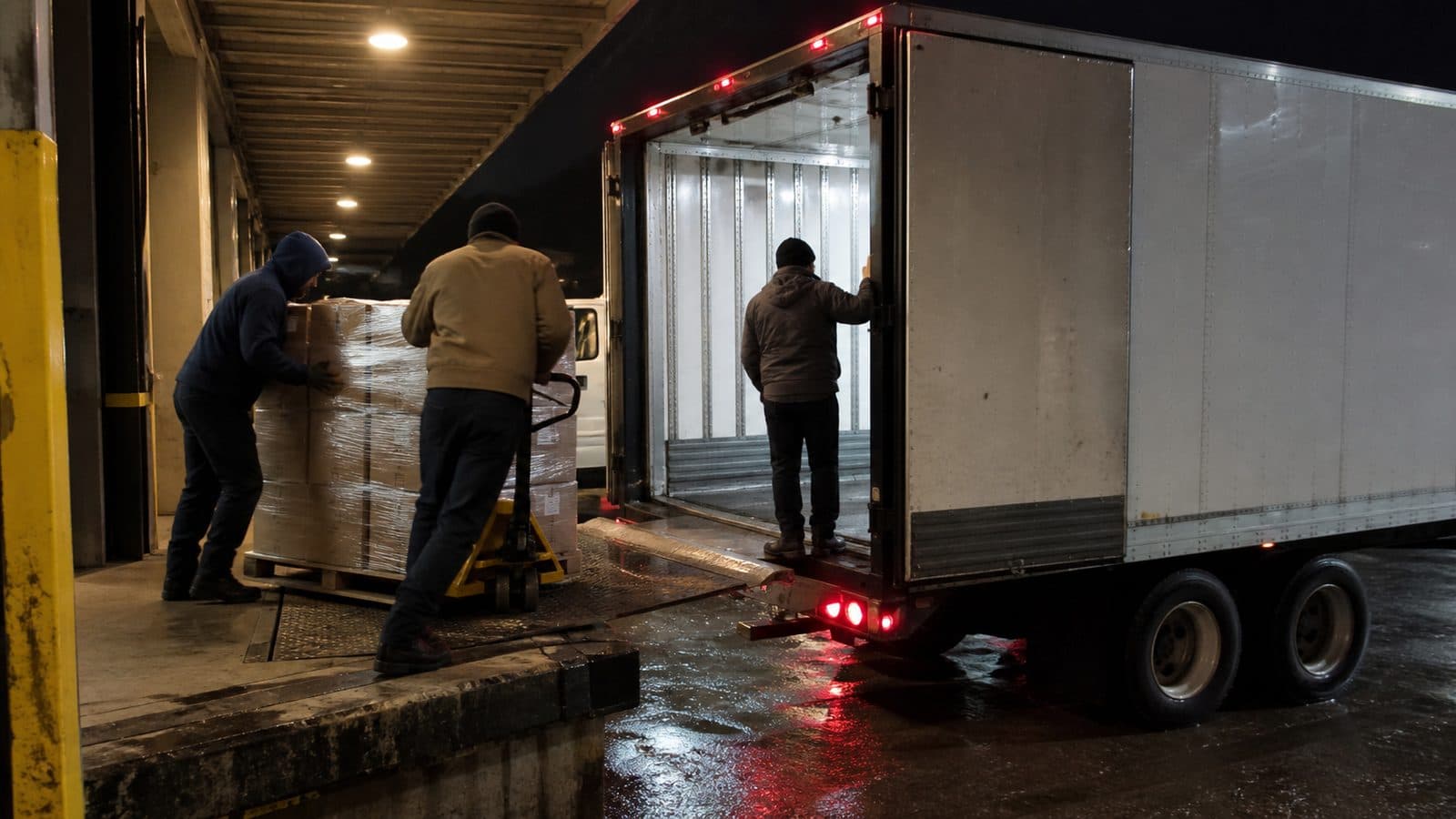
What the Work Looks Like on a Plant or DC Floor
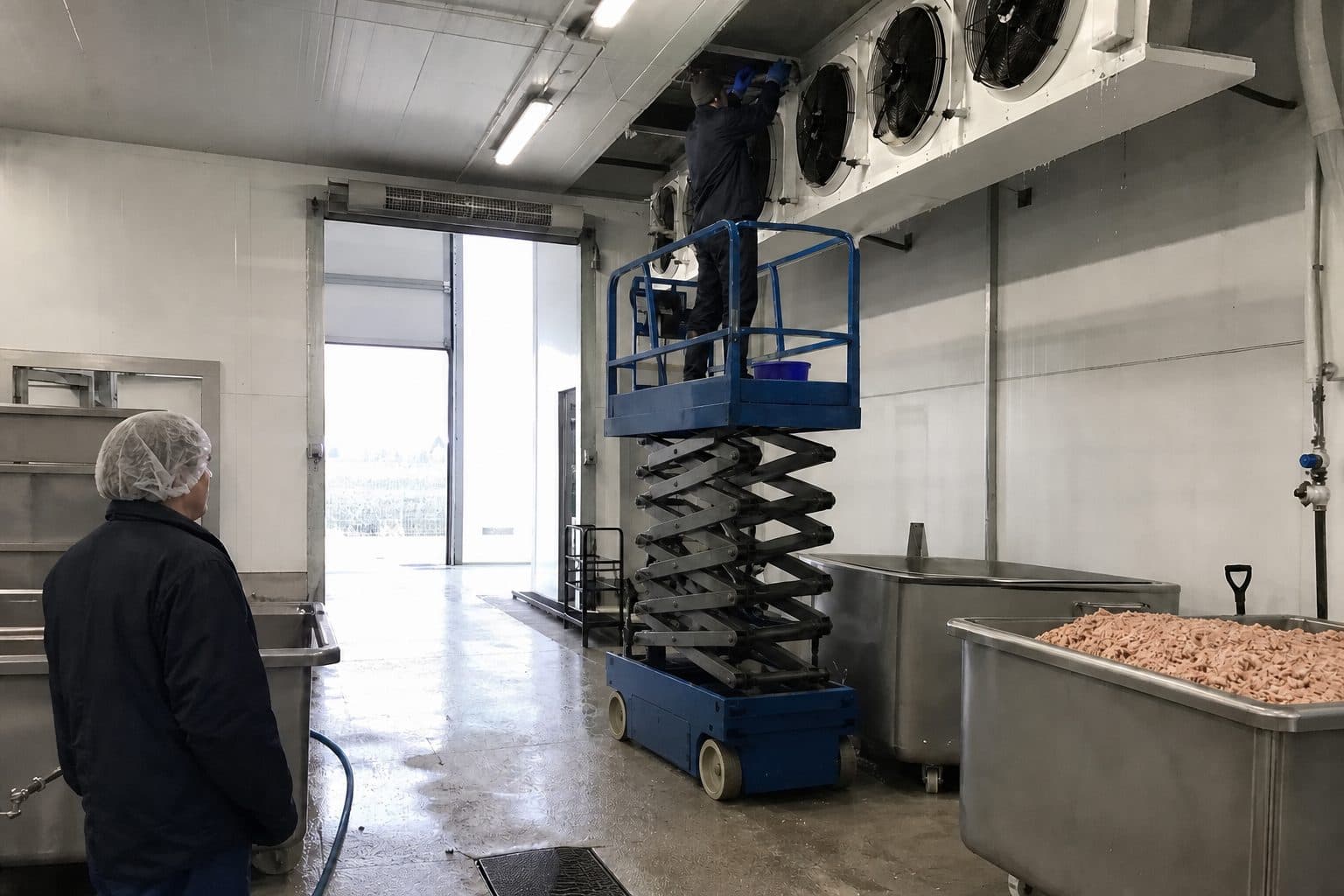
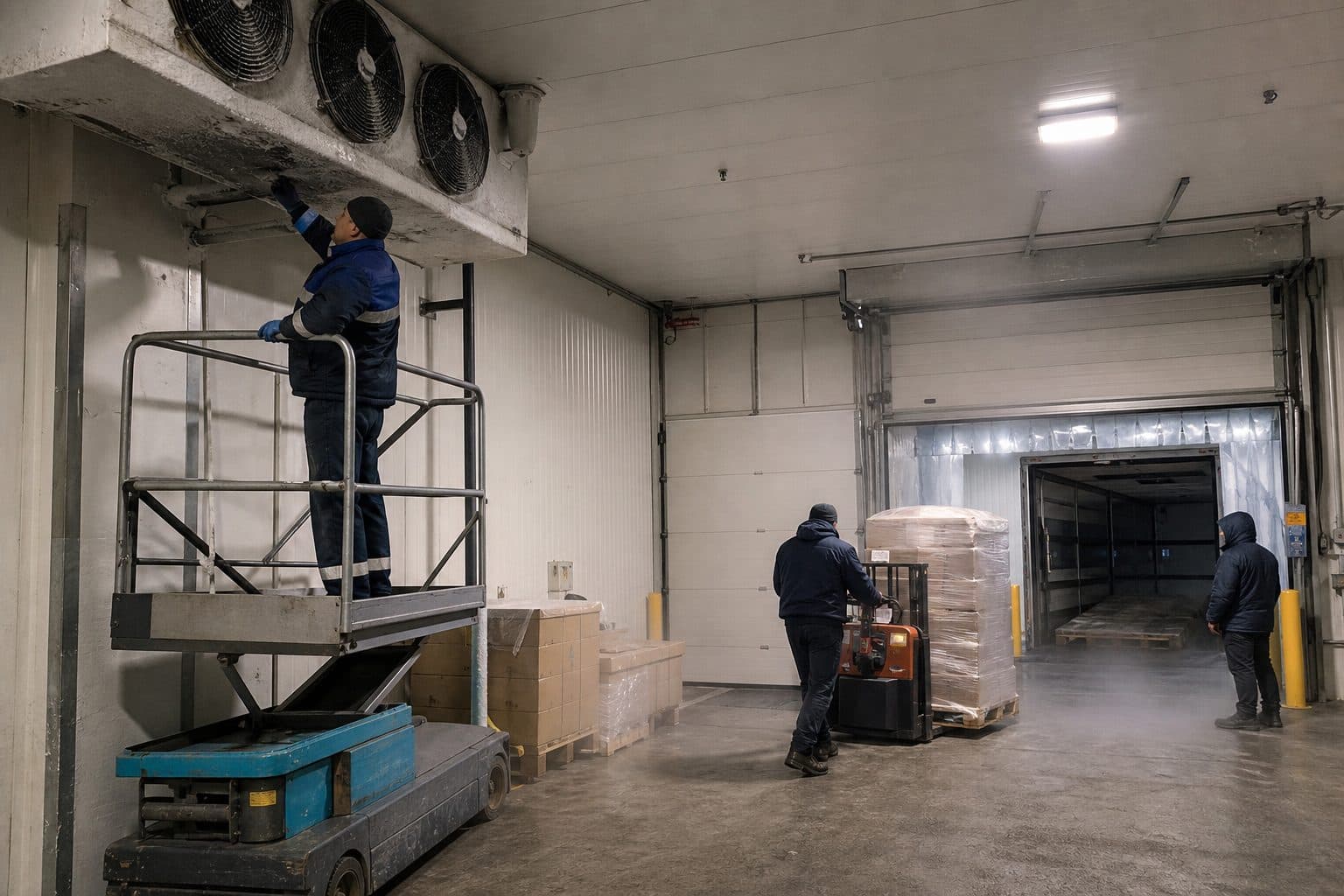
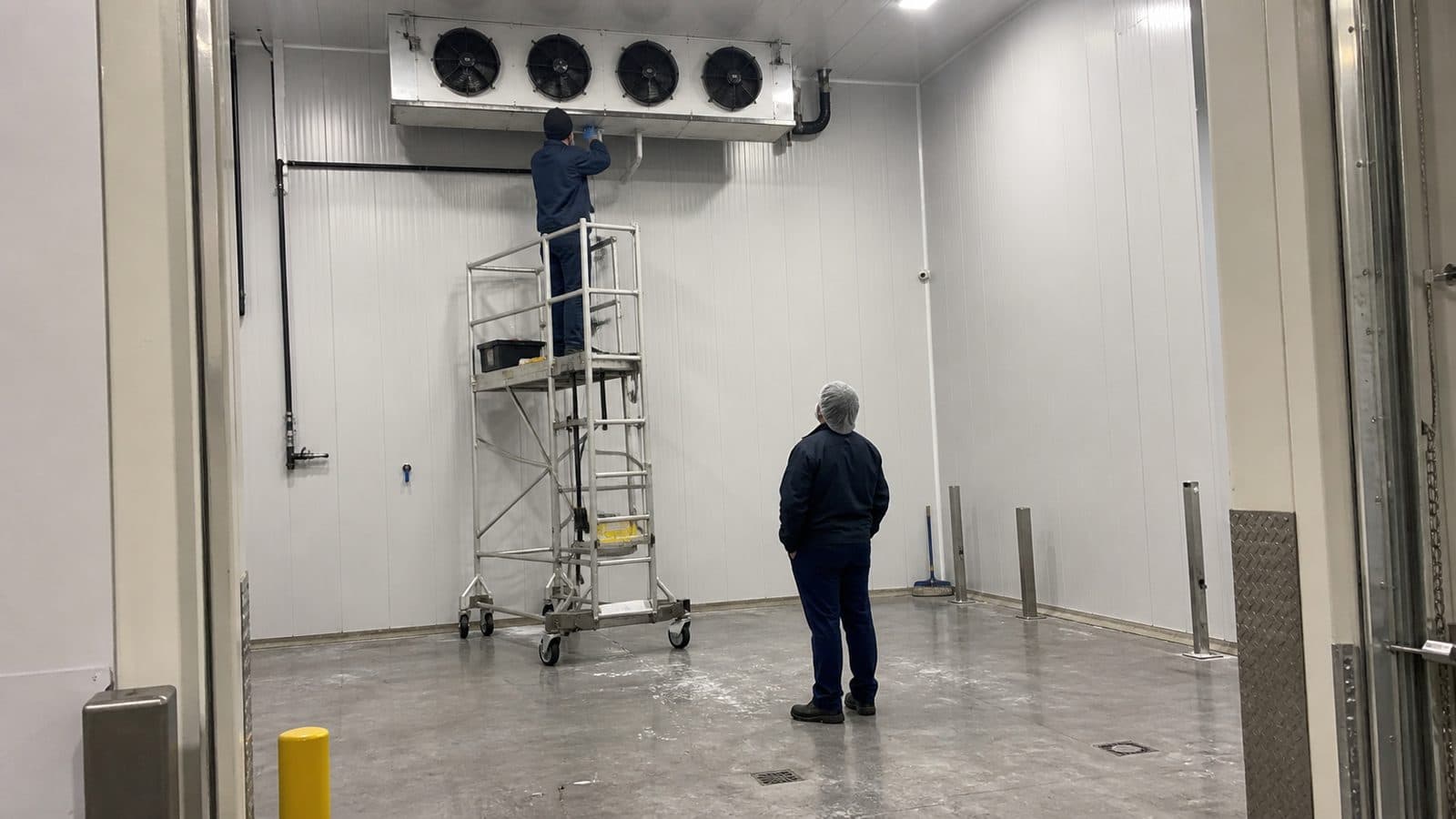
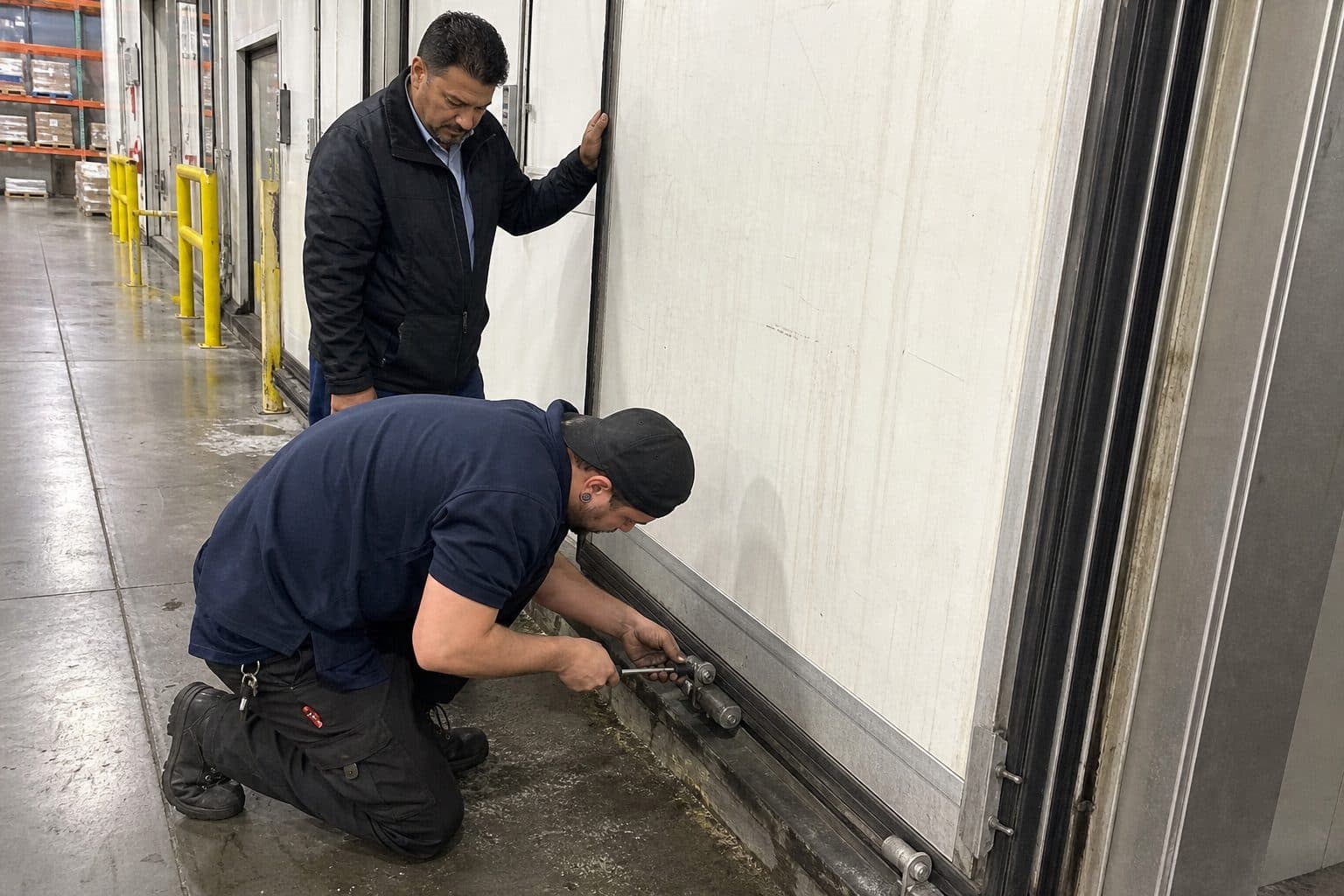
Faults in a processing or distribution room are rarely exotic — a blocked drain pan, a door that stopped sealing, a rack that took a room with it. Here is the shape of a response on that kind of site.
Questions Plant and Distribution Managers Ask Us
Can you give us temperature records for our food safety file?
We monitor and record temperature for the whole time product is in our mobile storage, and the service record covers when we were called, when we arrived, when product left your room and entered ours, the temperature held while it was with us, and the fault we diagnosed. What that documentation has to satisfy is your plan and your QA team's call — we provide the record, you file it.
We move everything by pallet. Does that change what you send?
It changes the conversation with dispatch. Tell the coordinator roughly how many pallets are at risk, whether you are loading by forklift or pallet jack, and what your dock looks like — height, apron, approach. We put together custom cold storage around the load and the site rather than sending a fixed unit, and a coordinator confirms exactly what is coming before it rolls.
Our production line is down, not just storage. What can you actually do?
Two things in parallel. A 313A-licensed mechanic works the root cause on the failed equipment rather than a temporary patch, which is what gets the line back. At the same time, mobile cold storage holds finished product and in-process stock so the outage does not turn into a write-off on top of the downtime.
Can you work without shutting down our shipping schedule?
That is the plan we make on the call. Trailer placement, staging and transfer routes are worked out with your shipping or receiving supervisor so dock doors stay usable and trucks keep loading while a room is out of service.
Which rooms and systems are in scope?
Walk-in cold rooms and freezer rooms, multi-compressor rack systems, refrigerated display and dock-level units, and the doors, evaporators and controls that go with them. Specialised process equipment — blast chill and blast freeze cabinets, industrial ammonia or CO₂ plant — is worth naming on the call before a truck rolls, so you get a straight yes or no rather than a technician who arrives and cannot help. Either way, mobile cold storage can be dispatched to hold the product while you sort the equipment out.
Are your people licensed for work in a regulated facility?
The mechanic who works on your equipment holds a 313A refrigeration and air conditioning mechanic licence, and refrigeration work is carried out by a TSSA-registered contractor. Cold Rescue is WSIB registered and carries commercial liability insurance. Registration details are provided on request rather than published.
Tell Us Which Room, and How Much Is in It.
Give dispatch the site, the rooms affected, roughly how many pallets are at risk and the range they have to hold. A coordinator calls you back to confirm the ETA and what is being dispatched. Already critical? Call the line directly: (416) 578-9977.